
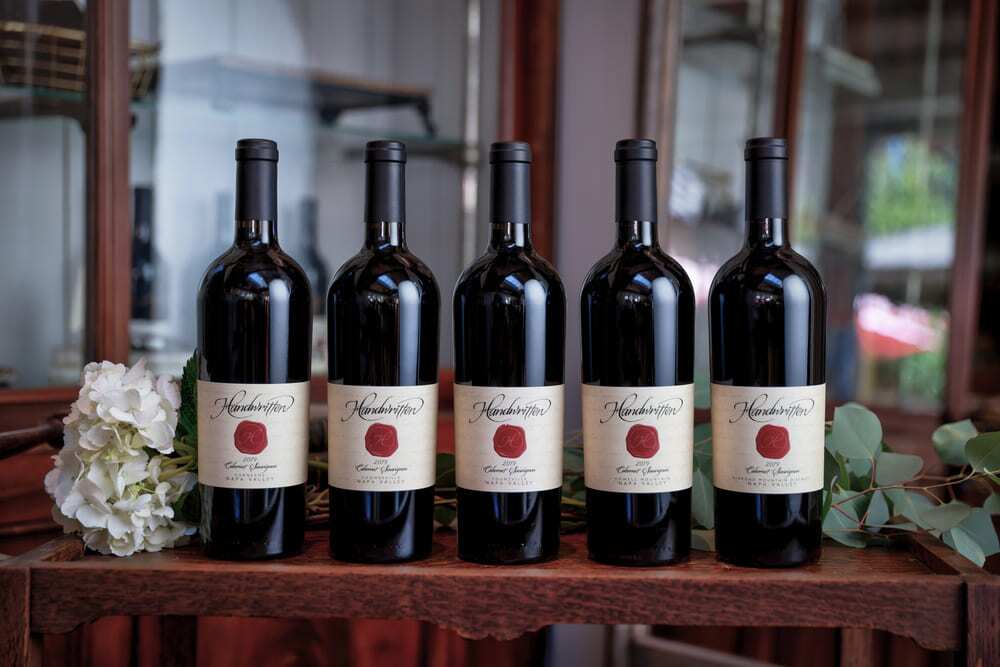
Pour a young Cabernet Sauvignon and taste it on its own, and your mouth will likely pucker a little. That dry, gripping feeling across your tongue and cheeks has a name: astringency. Now take a bite of a well-marbled steak and taste the same wine again. The grip softens. The fruit opens up. Nothing in the bottle changed between sips, so what happened? It is one of the questions we hear most often during our Yountville tasting experiences, and the answer turns out to be more chemistry than mystery, something we love explaining at Handwritten Wines.
What Are Tannins, and Why Does Cabernet Have So Many?
Tannins are naturally occurring compounds called polyphenols, and in wine they come almost entirely from the grape’s skins, seeds, and stems. During fermentation, red wine sits in contact with those skins and seeds for days or weeks, pulling color and tannin into the juice along with it. Cabernet Sauvignon is a small, thick-skinned grape with a comparatively high seed-to-pulp ratio, which means it starts with more tannin-rich material to draw from than a thinner-skinned grape like Pinot Noir. Once in your glass, those tannin molecules bind to the proteins in your saliva, and that binding is what creates the dry, rough sensation across your tongue, also known as texture or mouthfeel, and is part of what makes Cabernet so great to pair with rich foods.
How Fat and Protein “Soften” Tannins in Your Glass
Red meat changes the equation the moment it hits your palate. Fat and protein are excellent tannin-binders, arguably better at the job than the proteins in your saliva. When tannins have meat to grab onto instead of the tissue in your mouth, the wine feels rounder and less astringent, and its fruit becomes easier to taste. The trade runs both ways. Wine’s tannin and acidity cut through the richness of the fat, clearing your palate between bites so the next mouthful of steak tastes just as good as the first. Neither the wine nor the dish does all the work. They balance each other, in real time, one bite and one sip at a time. That balance is the entire trick behind a good pairing.
Which Cut of Beef Makes the Best Cabernet Partner?
Ribeye carries the most marbling, with threads of fat woven through the muscle that render as it cooks. That fat gives Cabernet’s firmest tannins plenty to bind to, which is why a bold, structured Cab and a well-marbled ribeye rarely disappoint each other. Filet mignon sits at the other end of the spectrum. It is lean and buttery in texture, with much less fat to soften a wine’s grip, so a very tannic Cab can overwhelm it rather than complement it; filet tends to prefer a wine with softer, more integrated tannin, often one with a few more years in the bottle. Sirloin lands in the middle. It carries enough fat to stand up to a moderately structured Cab without the richness of a ribeye, which makes it the most forgiving cut on the list and a reasonable place to start if you are still learning to pair by feel rather than by rule.
Curious which style suits your cut of choice? Shop our current Cabernet Sauvignon lineup and find the bottle that matches your dinner plans.
Why Hillside-Grown Cabs Are Built for Rich, Meaty Dishes
Location shapes tannin structure before a single grape reaches the winery. Vines planted on hillside and mountain sites, like the small parcels we draw from across Napa Valley’s higher elevations, work harder for water and sun exposure than vines on the valley floor. That effort produces smaller berries with a higher proportion of skin to juice, and skin is where tannin lives. The result is a firmer, more assertive tannin structure from the start. Wines like our Howell Mountain and Diamond Mountain Cabernets carry that structure honestly. It is viticulture, not a marketing line: stressed vines, concentrated fruit, structured wine. You can read more about how we source across ten distinct Napa Valley AVAs on our About Handwritten page.
Ready to taste what elevation does to a glass? Explore our hillside and mountain Cabernets in the shop.
Where to Start: Three Pairings We’d Pour
Our Howell Mountain Cabernet Sauvignon, with its firm, mountain-grown tannin, is our go-to alongside a well-marbled ribeye cooked simply: salt, pepper, and high heat. Our Diamond Mountain Cabernet carries a similar backbone and finds its match in slow-braised short ribs, where hours of cooking render the fat and collagen soft enough to meet the wine halfway. If beef Wellington is on your table, its richness, from the duxelles, the pastry, and the seared tenderloin, gives even our firmest Cabs plenty to work with; you’ll find the full beef wellington recipe and Cab pairing on our site. For a broader look at pairings across our Cabernet lineup, The Complete Cabernet Sauvignon Food Pairing Guide walks through several more.
None of this is really about chemistry once the plates are on the table. It is about a glass and a bite doing more for each other than either could do alone. Try the pairing yourself: book the Bread & Butter tasting experience at Handwritten Wines, where we pair our Cabs with artisan food, or shop Handwritten Napa Cabernet and build the pairing at home.